For Job Seekers
Run your entire search
from one place
Every application, interview, contact, and follow-up — tracked automatically, not rebuilt in a spreadsheet. And your network is how you actually land the role, so every networking tool is included too.
The old way of job hunting quietly stopped working
Submit a resume, wait, hope — that's still how most people search, and it's a much worse bet than it used to be. Nearly every large employer now runs applications through an applicant tracking system before a person ever sees them. A single posting on a major job board can pull in hundreds of applicants within days, and a real share of them aren't even qualified for the role. Getting an application seen has become its own separate problem from being qualified for the job.
So job seekers apply to more roles to compensate — faster, broader, less targeted — because when a system feels like a black box, volume feels like the only lever left to pull. It's an understandable response. It also doesn't work especially well, and it misses something bigger entirely: a large share of hiring happens through people, and someone with an inside connection starts far ahead of a stranger in the pile.
7×
more likely to be hired: U.S. applicants with an inside connection, compared with those without one
LinkedIn37%
of hires come from referrals — even though referrals are only about 6% of applications
Bend Chamber48%
of job seekers admit to "spray and pray" — applying broadly instead of targeting a real fit
MonsterApplying to more jobs isn't the fix. Applying through more doors is.
A resume dropped into an applicant tracking system is competing with hundreds of others for the same posting. A warm introduction skips that queue entirely — and it's how most of the roles that never made it to a job board actually get filled. And the relationships that get you there don't stop paying off once you're hired: the same network that surfaces an opportunity today is what brings you a client, a partner, or your next opportunity years from now, whether you're advancing in a career or building something of your own.
Application Tracking
Your entire pipeline,
at a glance
Stop losing track of where you stand. See every application, its current stage, and your next action — all in a clean, sortable list, with a pipeline chart showing your stage distribution instantly.
- ✓Status stages: Applied → Phone Screen → Interview → Offer → Rejected
- ✓Track company, role, applied date, and next step for each application
- ✓Click any row to add notes, set reminders, and log activities
Applications (12)
Pipeline Distribution
Smart Calendar
Every interview,
never missed
Activities you schedule — calls, emails, prep sessions — automatically appear on your calendar alongside your interview events, so nothing slips through between rounds.
- ✓Color-coded by type: interviews, calls, emails, todos
- ✓Drag and drop to reschedule instantly
- ✓Month, week, and day views with a current-time indicator
LinkedIn Recruiter Search Audit
Job Search planGet found by recruiters —
and by the algorithm that decides who they see
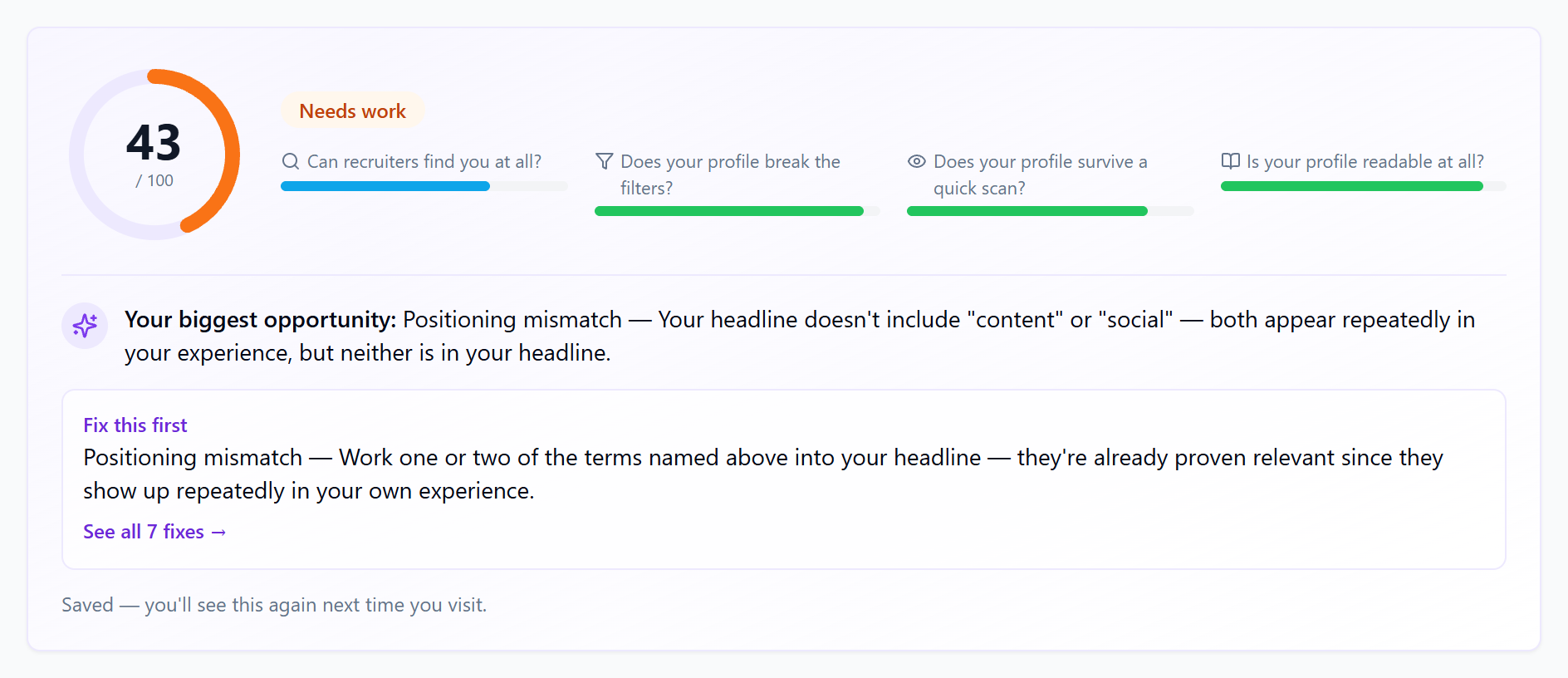
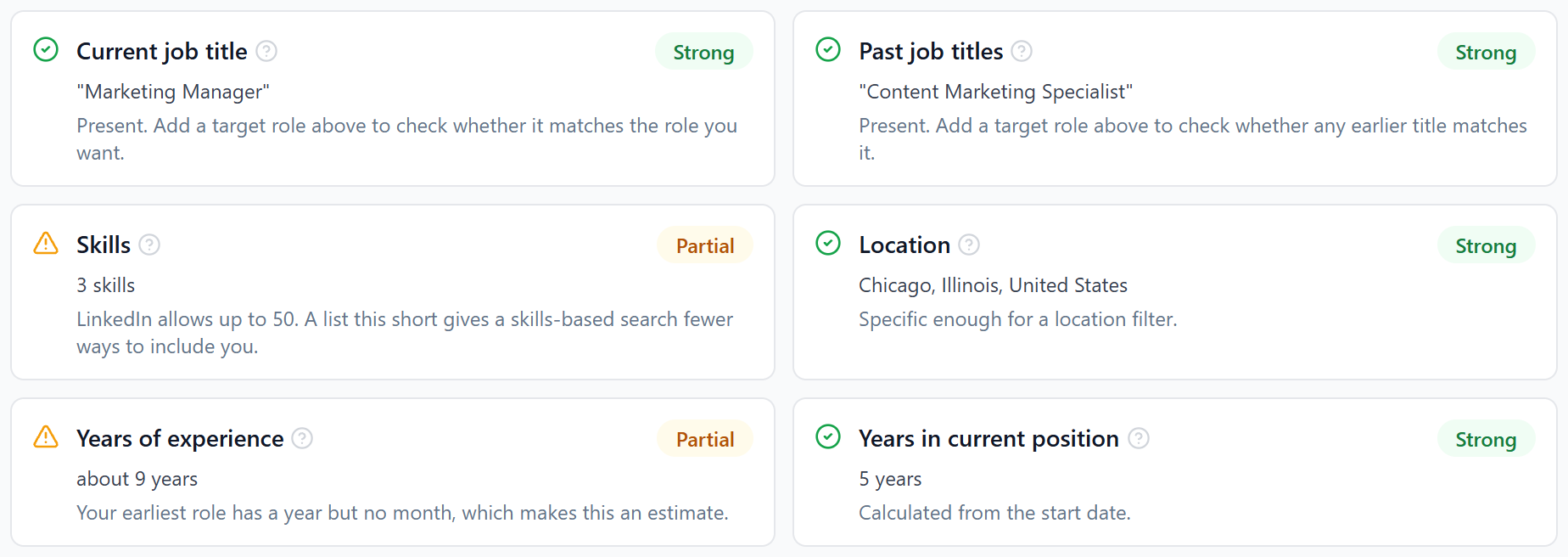
Recruiters don't browse LinkedIn. They search it, often before a role is ever posted. Before anyone reads your profile, LinkedIn's search has already decided whether you appear and how high. That ranking leans on signals you control: the keywords in your headline and job titles, the skills you list, complete dates, a specific location, and whether Open to Work is on.
The audit goes through your profile section by section against those signals. It shows what a recruiter's filters can and can't see, which of your strongest keywords never reach your headline, and exactly what to change. The goal isn't only a profile that impresses a recruiter once they find it. It's giving LinkedIn's algorithm more reasons to put you in front of the recruiters searching for someone like you.
No tool can see inside LinkedIn's ranking or promise a position. The audit works on the signals LinkedIn documents and recruiters filter on.
- ✓Scores four questions: can recruiters find you, do you pass their filters, do you survive a quick scan, is your profile readable
- ✓Checks your profile against 10 Recruiter filters: job title, skills, years of experience, location, Open to Work, and more
- ✓Every finding quotes your own words, with a specific fix and your biggest opportunity called out first
- ✓A search test and Boolean tester let you run the kinds of searches recruiters run
- ✓What you paste stays on your device. Only your score and fixes are saved, so you can watch your score climb
The LinkedIn Recruiter Search Audit is included with the Job Search plan.
The networking tools that land the role
Most roles are filled through someone who knows someone. These show you which relationships have stalled, help you make introductions, and give every contact one link to who you are.
Relationship Diagnostics
NewSee where relationships stall —
and who needs you next
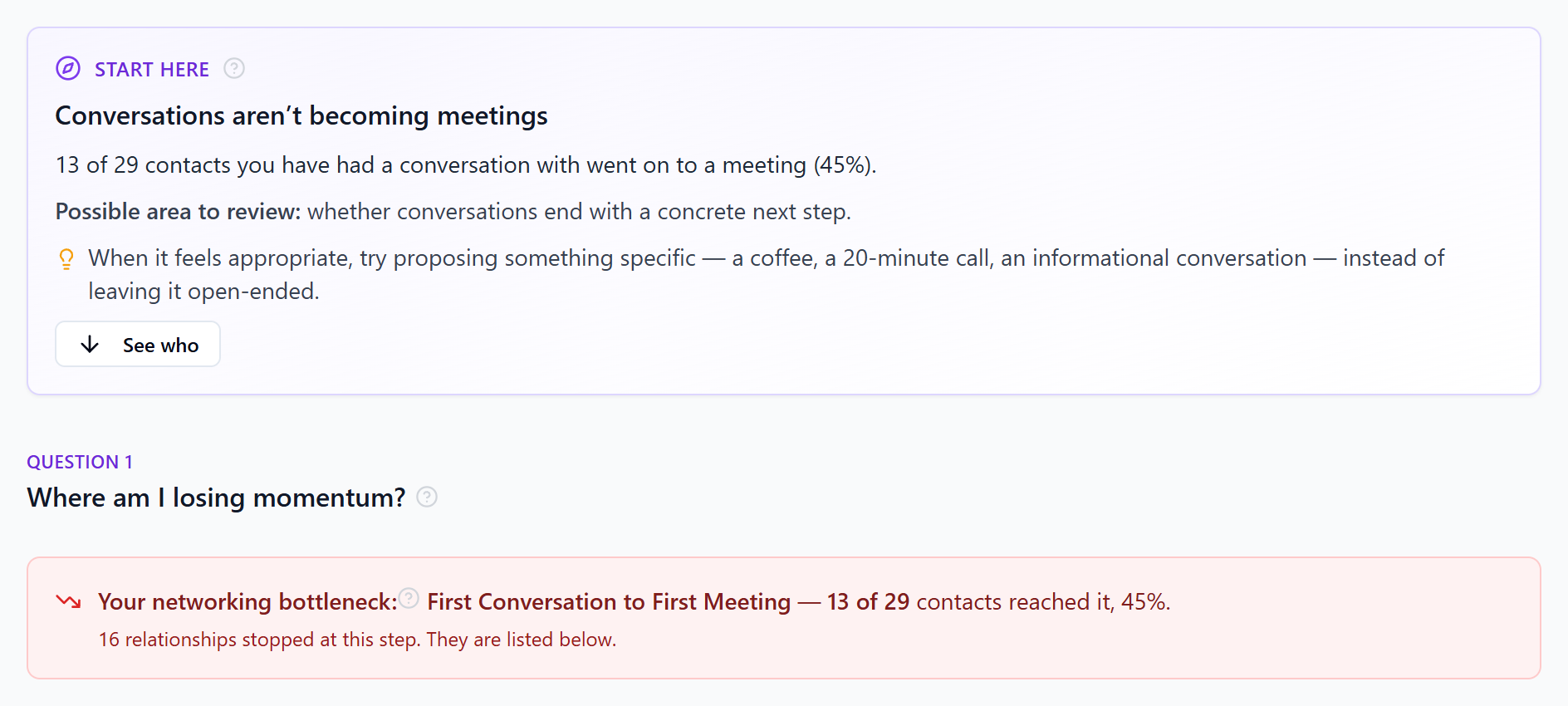
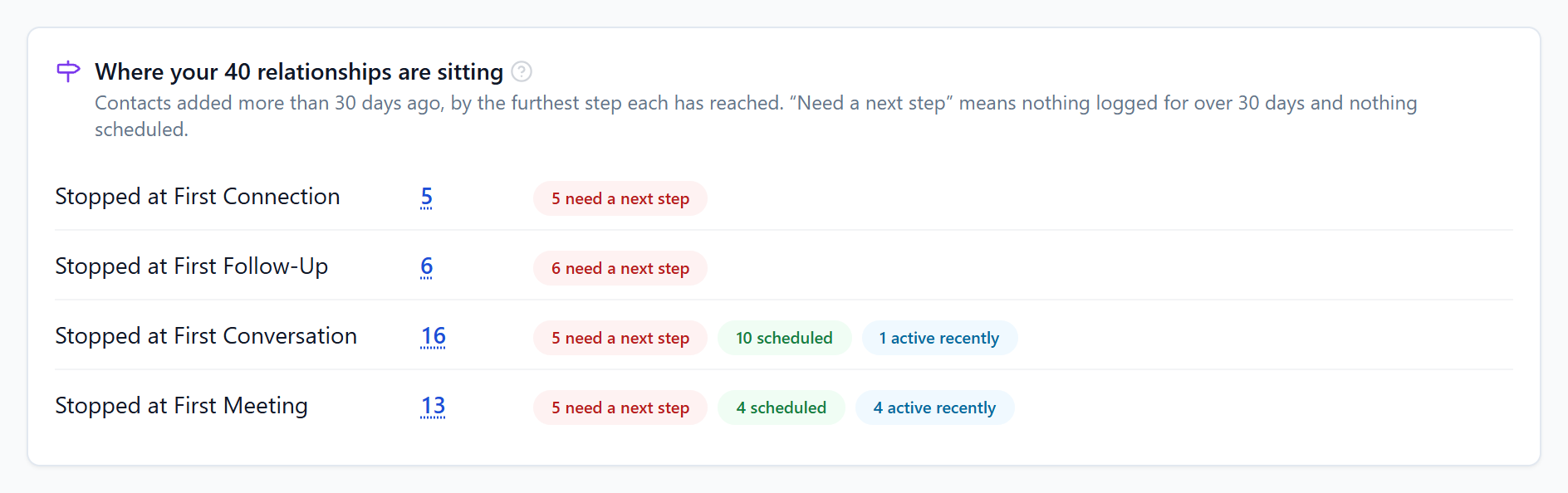
Most networks don't fail loudly. They just stop moving. Relationship Diagnostics reads your activity log and answers four questions: where you're losing momentum, which relationships have stalled, how quickly they progress, and what to do about it.
- ✓Names your bottleneck: the step where the fewest relationships make it through
- ✓Lists the people behind every number, with one click to schedule a follow-up or reach out
- ✓Tracks meeting follow-through, how long each step takes, and which sources turn into real relationships
- ✓Reports facts from your own log, never guesses about why, and every card explains itself
Introductions
NewBe the person who
connects people
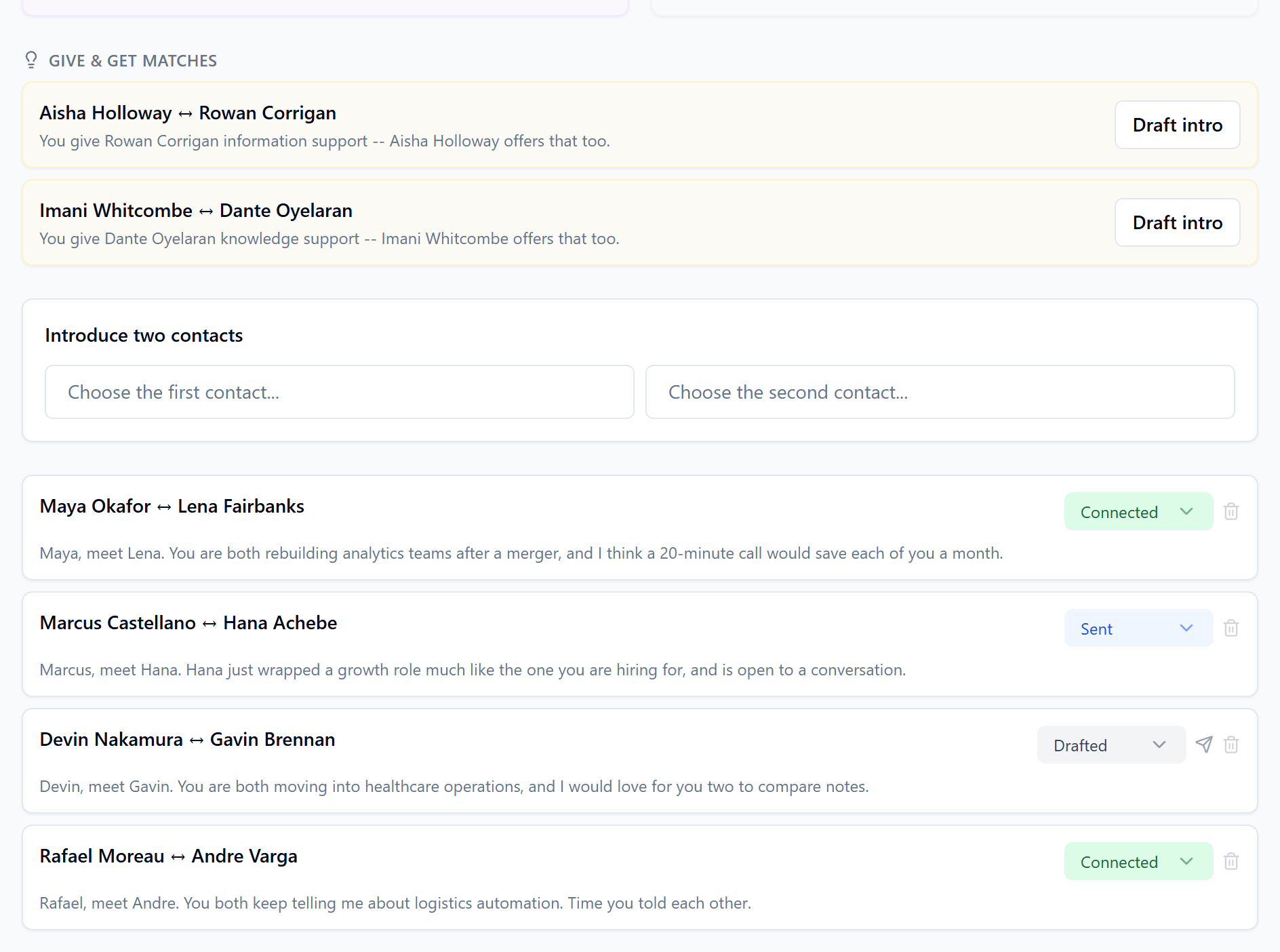
One of the quickest ways to become valuable in a network is to connect two people who should know each other. Introductions suggests pairs from the support you've already recorded on each contact, drafts the message for you to edit, and tracks every intro through to a real connection.
- ✓Give & Get Matches suggest who should meet, with the reason shown instead of a black-box score
- ✓An editable draft addressed to both people. Nothing sends until you click Send
- ✓Every intro moves from Drafted to Sent to Connected, so you always know whether you followed up
Public Profile Page
One link that
says who you are
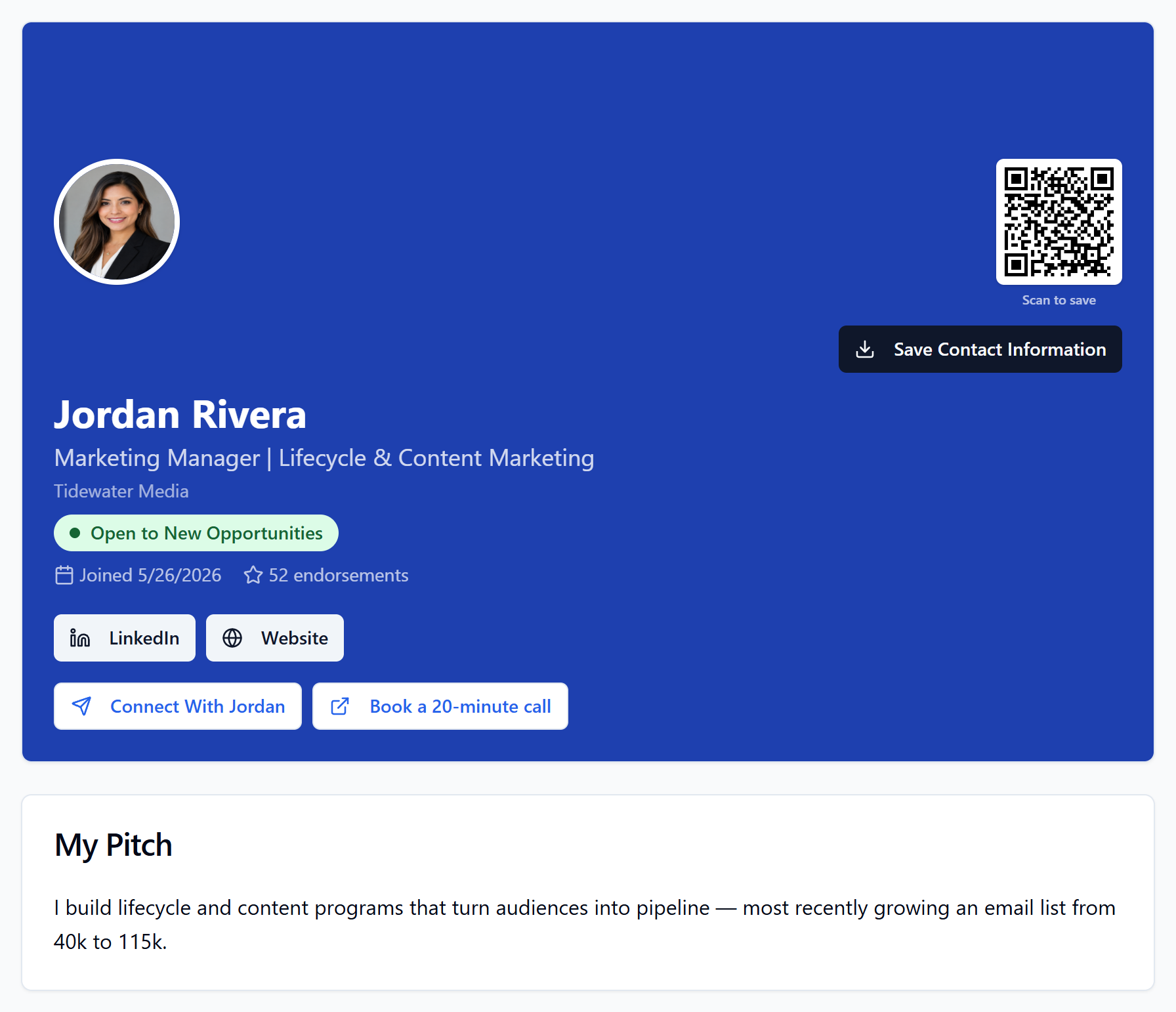
Your public profile page is a portfolio people actually open: your headline and pitch, skills with endorsements, projects with real results, and recommendations from people who know your work.
- ✓Visitors can save your contact card, endorse a skill, or write you a recommendation
- ✓A clear call to action: book a call, connect with you, or visit your site
- ✓Share it by link, or by QR code at events and on your business card
Built from what actually works in a search
Diagnostic tools that turn generic job-search advice into a number about your own search.
Analytics & Insights
Your response rate, pipeline stage distribution, and weekly application volume at a glance.
Learn MoreIdeal Role Criteria
Define your must-haves and deal-breakers once. Every new application gets checked against them before you log it, so applying stays deliberate.
Source Breakdown
Most job seekers spend the bulk of their time on the least effective channel. See your actual mix of job boards, recruiters, and networking against your own target.
Weekly Momentum Tracker
Weekly goals you choose across five habits that move a search — new contacts, companies researched, re-contacts, articles, and networking comments. Set each one, or turn it off.
Give & Get
Note what you can offer a contact, and what they can offer you, across seven kinds of support — a recruiter tip, a real introduction, an honest read on a company. Shows up in your Meeting Prep Brief.
Values Match
Set the handful of values that matter to you once. Flag which relationships reflect them, and it becomes a light tiebreaker in your Reconnect Queue — never an override, just a nudge.
Your network is how you land the role.
Every networking tool is already included on the Job Search plan — warmth scores, the reconnect queue, the Relationship Funnel, your Public Profile. See what they do.
See everything Networkers getStart free — no card required
Unlimited applications, contacts, and calendar. Upgrade whenever you want the pipeline analytics and diagnostic tools above.
Job search questions, answered honestly
What people actually ask about applying, tracking, and following up.